
Our Services




Counter-Surveillance
Covert Security and Executive Protection
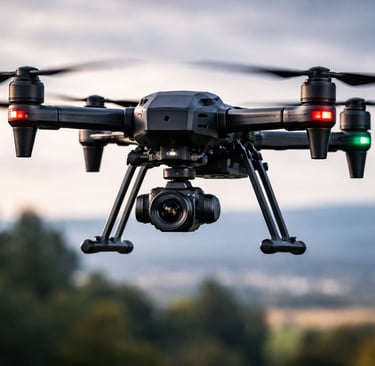
We provide both conventional executive protection and low-visibility protective operations designed to safeguard people, assets, and ongoing activities without unnecessarily disrupting normal environments. Depending on operational requirements, protection usually involves discreet plainclothes coverage, or covert methods intended to reduce visibility while maintaining situational awareness and rapid response capability. This approach preserves privacy, continuity, and freedom of movement while reducing unnecessary attention. Effective protection relies on early threat recognition, behavioral assessment, and the ability to identify indicators that may go unnoticed without specialized experience in protective operations, surveillance detection, and operational security. To support threat identification and environmental awareness, we employ discreet mobile electronic assessment platforms capable of analyzing anomalous wireless activity and signal patterns that may indicate unauthorized devices, hostile technical activity, surveillance efforts, or other suspicious activity within an operational area. Modern threats frequently involve both physical observation and digital reconnaissance before any direct contact occurs. As a result, effective protective strategies must also account for online research, digital patterning, publicly accessible information, and other internet-based methods that may support targeting, planning, or hostile intent.
We offer cost effective strategic protection and investigation plans that are minimally invasive and highly effective.
Counter-Surveillance teams are used to detect, disrupt, and deter hostile surveillance and pre-operational planning. They collect intelligence to identify, manipulate, exploit, or apprehend hostile surveillance personnel or networks. Conventional security teams are often easy for hostile surveillance or reconnaissance elements to identify and pattern over time, allowing adversaries to adjust their positioning, timing, and behavior to avoid detection. In contrast, a professionally managed surveillance operation is intentionally difficult to recognize, using rotating personnel, vehicles, and movement patterns to minimize predictability and reduce operational visibility. Much of this activity remains unnoticed by individuals without specialized training and experience in surveillance, counter-surveillance, and surveillance detection operations. To support threat identification and operational awareness, we employ discreet mobile electronic assessment platforms capable of analyzing anomalous wireless activity and signal patterns that may indicate hostile, suspicious, or coordinated activity within an operational area. Modern surveillance efforts frequently begin in the digital environment long before any physical presence is observed. As a result, effective protection and detection strategies must also account for online research, digital reconnaissance, and other internet-based methods used to collect information, establish patterns, and support hostile intent. Identifying hostile surveillance is only the first step. Depending on the circumstances, we can transition from intelligence collection to active countermeasures that may include apprehending hostile surveillance personnel, disrupting the adversary's surveillance efforts, degrading their ability to collect intelligence, and preventing them from achieving their objectives.
Covert surveillance detection is the best way to be proactive towards hostile threats before they move into the attack phase of their plan.
"Those that wish harm on others, especially professional and dedicated terrorist or criminal organizations will strive to gather intelligence on their targets. With this intelligence, they will look to exploit the weaknesses of a target and turn these into opportunities for a successful attack."
By: Explorer Travel Security
Proactive Instead of Reactive / Offense over Defense.
Our Counter-Surveillance and Protective Surveillance teams can serve as an independent overwatch element for executive protection and security operations. Operating outside the client's immediate security footprint, they can add a security layer to fixed site locations or conduct discreet, low-profile route reconnaissance ahead of mobile movements. They can conduct route observation posts or remain in the area after a movement or event to identify follow operations, mobile surveillance, or other suspicious activity.
This includes assessing planned travel corridors, identifying suspicious activity, evaluating potential choke points, and detecting hostile surveillance, pre-operational attack indicators, or potential ambush locations before the client's movement.
Protective Surveillance
Unlike traditional surveillance operations, the objective is not intelligence collection for its own sake. Protection is always the primary mission, with surveillance serving as the means to detect threats early, maintain continuous situational awareness, and enable timely intervention. The effectiveness of protective surveillance depends on remaining inconspicuous and difficult to identify as a security asset. By avoiding a recognizable protective posture, these teams preserve the element of surprise, reduce the likelihood of being patterned or bypassed by adversaries, and maintain the ability to identify threats before they can affect the client. When necessary, they can rapidly transition from covert observation to overt protective action.
Protective Intelligence & Counter-intelligence
Threat and Risk Assessments
Structured evaluations that identify potential threats, analyze vulnerabilities , and measure the likelihood and impact of adverse events. This effort combines intelligence, environmental factors, and operational context to prioritize risks and guide the design of effective mitigation and protection strategies.
Security Investigations
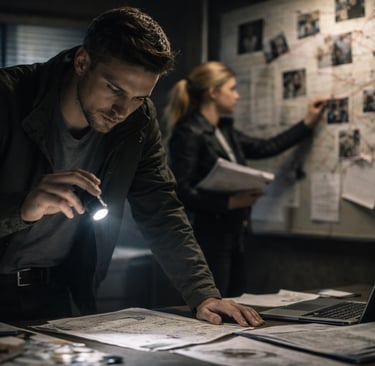
Systematic inquiries conducted to identify, analyze and document security related incidents, threats, or misconduct. This involves evidence collection, interviews, surveillance, and analytical review to determine facts, assess risk, and support prevention and mitigation.

Team Surveillance / Surveillance Detection
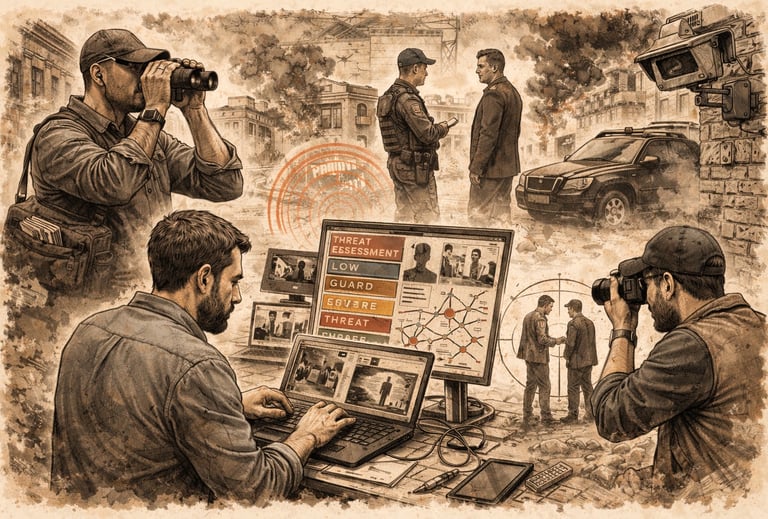
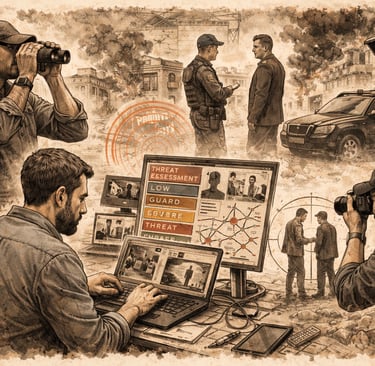
Surveillance is an effective tool for developing real-time information and verifying information obtained through other investigative sources. Experience has shown that the most effective surveillance is conducted by a trained and organized team. By rotating roles, sharing information, maintaining layered coverage, and coordinating observations from multiple perspectives, the team reduces the risk of detection while significantly increasing operational effectiveness.
Real-time information enables informed decisions while events are unfolding rather than after they have occurred. Surveillance can confirm or refute assumptions, identify changes in behavior or routine, reveal previously unknown associates or locations, and document activities that may be relevant to an investigation or protective operation. This timely intelligence allows clients to respond proactively, adjust operational plans when necessary, and make decisions based on verified observations rather than speculation.
Surveillance techniques support both intelligence collection and the identification of hostile surveillance, pre-operational attack indicators, and other suspicious activity.



Deliberate evaluation of security measures through controlled scenarios, simulations, and real-world exercises to identify weaknesses and verify effectiveness. This validates security procedures, personnel readiness, and systems, ensuring protections perform as intended under realistic conditions.
Security Testing
The collection, analysis, and interpretation of information to identify potential threats and protect people, information, operations, and decision-making from hostile observation, exploitation, or manipulation.
This includes gathering, evaluating, and assessing information relating to individuals or groups who may possess the interest, motive, intent, and capability to cause harm or disrupt operations, while protecting sensitive information that could be exploited by those planning criminal, hostile, or disruptive acts.
Reduce risk and exposure while improving readiness and capability.


Private Investigation
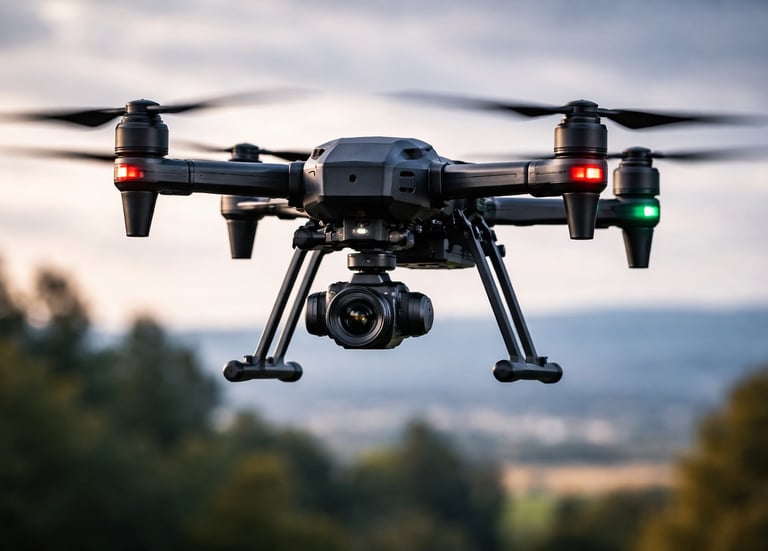
F.I.I.D. provides discreet investigative support for individuals, attorneys, businesses, and court-related matters where time, accuracy, and reliable information matter. Our work focuses on identifying facts, locating hard-to-find individuals, supporting legal process, and helping clients make informed decisions in uncertain or time-sensitive situations. We assist with attorney and court-related matters, witness and subject location, difficult or evasive individuals, litigation support, field investigation, and information gathering. When appropriate, we utilize coordinated team-based investigative methods to improve continuity, reduce detection, and provide more reliable results in complex situations.


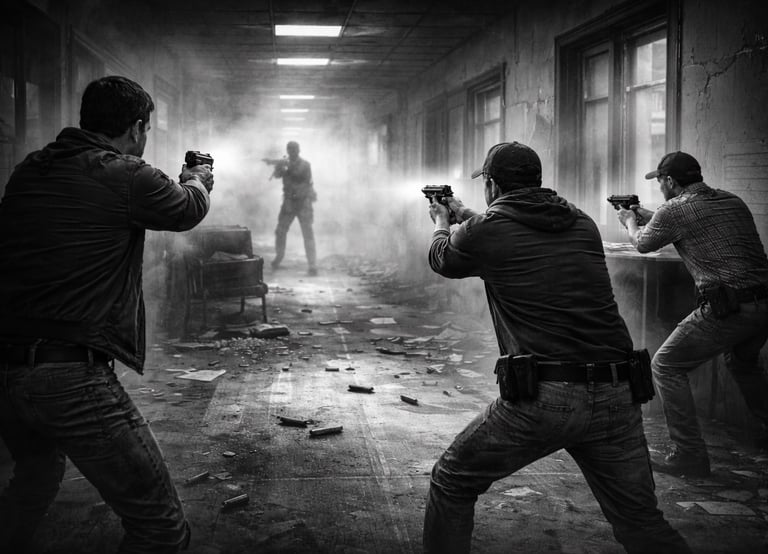
This is a rapid response to recognize, contain, and mitigate an active shooter threat. It focuses on protecting lives through immediate action and decision making. We accomplish this with movement, communication, and intervention, while supporting evacuation, medical response, and coordination with law enforcement.
Active Shooter Response


Counterterrorism and Violence Prevention
The proactive identification, deterrence, and disruption of terrorist or extremist threats through intelligence-led risk assessment, surveillance detection, protective measures, and incident response. Private-sector counterterrorism is covert, non-uniformed, and intelligence-driven, emphasizing early threat detection rather than overt response. The objective is to identify hostile intent before an attack occurs and reduce risk without drawing attention or escalating presence.
Kidnap Prevention & Crisis Response


Kidnappings and targeted abductions often unfold quickly and with little warning, leaving families, businesses, and organizations uncertain about what to do during the most critical first hours. We provide discreet prevention planning, situational awareness, and protective measures intended to reduce vulnerability and deter opportunistic or targeted abduction attempts before they occur.
In the event of a suspected kidnapping or abduction, we provide immediate crisis support during the critical early response period. This includes helping determine whether an event is credible, assessing available information, confirming indicators of legitimacy, helping establish proof-of-life when appropriate, coordinating information flow, documenting communications, and assisting clients in making informed decisions during rapidly evolving circumstances. Where appropriate and safe, we can assist with law enforcement notification and coordination while helping preserve operational discretion and continuity.
The first 24 to 48 hours are often decisive. During this period, confusion, misinformation, panic, and uncoordinated communication can significantly complicate response efforts. Our role is to provide calm, structured crisis management and informed support until specialized resources, authorities, or advanced negotiators become available.
This service is focused on prevention, stabilization, crisis coordination, and protective support. We do not replace law enforcement, licensed legal counsel, or specialized kidnap and ransom response teams.
Kidnapping has become an increasingly global threat, with significant activity extending well beyond the historically high-risk regions of Latin America.
© 2025. All rights reserved.
Information security, discretion, and confidentiality are always our top priorities